
Reasons and rectification measures for poor cold insulation in die-casting
What are the main reasons for cold insulation in aluminum die-casting?
The
main causes of cold shut defects in the aluminum die casting process include
the following:
1.
Low Mold Temperature: If the mold temperature is too low, the molten aluminum
can cool rapidly during flow, preventing it from flowing smoothly and fusing
properly within the cavity, leading to cold shuts.
2.
Low Pouring Temperature: When the molten aluminum has a low temperature, its
fluidity decreases, causing it to cool quickly in the mold and preventing
proper fusion with the aluminum that flowed earlier, resulting in cold shuts.
3.
Slow Filling Speed: If the filling speed of the molten aluminum is too slow,
the front part of the aluminum may stay in the mold cavity for too long, cool
down, and not fuse well with the subsequent flow, leading to cold shuts.
4.
Poor Mold Design: Improper design of the gates, runners, or overflow channels
can cause the aluminum to flow unevenly, creating split flows or turbulence,
which hinders proper fusion of different parts of the molten aluminum,
resulting in cold shuts.
5.
Poor Venting: Inadequate venting in the mold cavity can trap air, obstructing
the flow of molten aluminum and leading to cold shut defects.
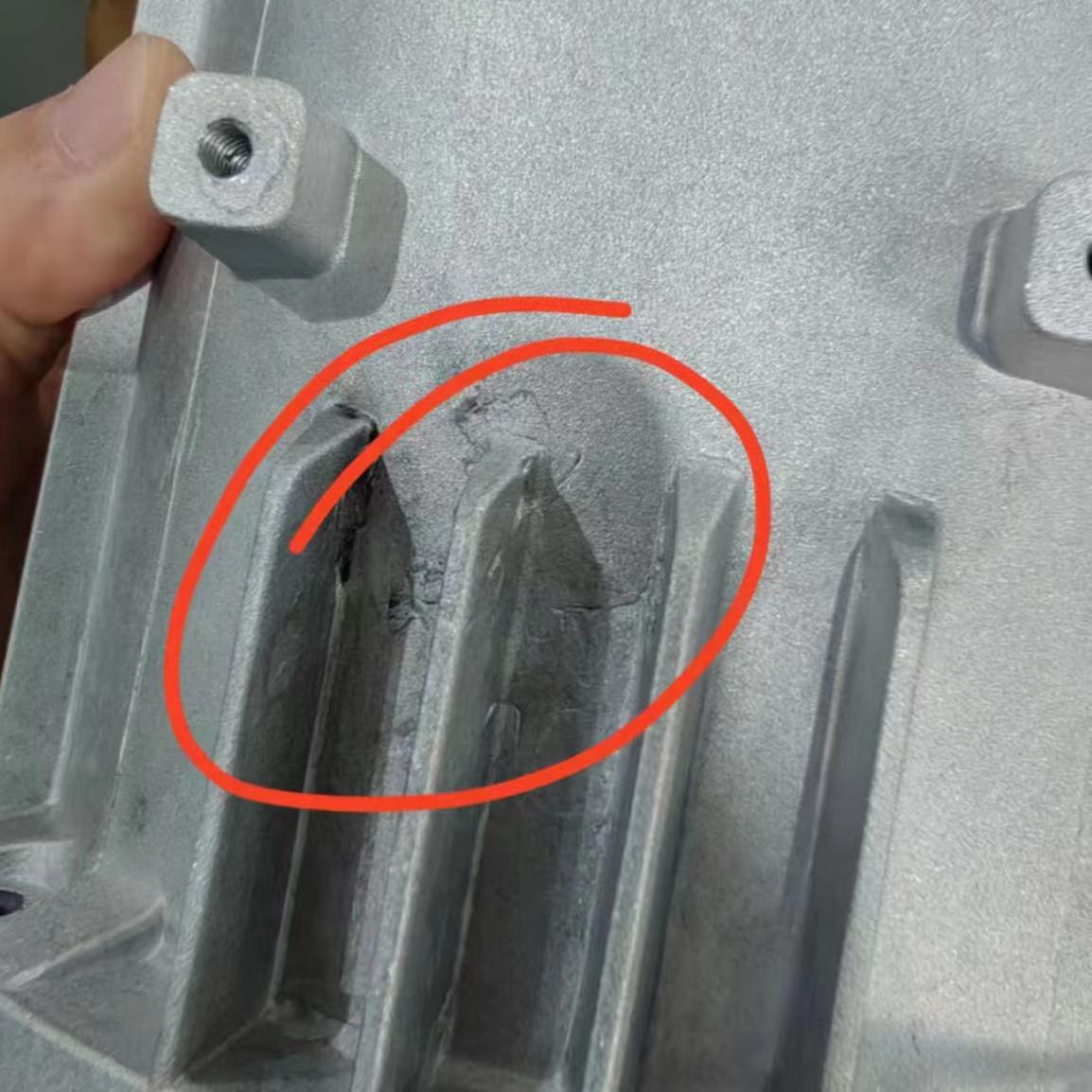
What are the main appearance phenomena of poor cold insulation?
Cold
shut defects primarily lead to the following appearance issues:
1.
Surface Cracks: Cold shut areas may develop noticeable linear or web-like
cracks, usually due to incomplete fusion of the molten aluminum, creating weak
zones prone to cracking.
2.
Depressions: The presence of cold shuts can cause uneven shrinkage during
cooling, leading to surface depressions or pits.
3.
Incomplete Molding: Cold shuts can result in areas of the product's surface
that are not fully filled or have irregular edges, affecting the product's
integrity.
4.
Uneven Color: Due to the uneven cooling of materials at the cold shut areas,
color variations may occur, causing the surface to appear mottled or uneven in
color.
These
appearance defects not only affect the aesthetic quality of the product but may
also compromise its structural integrity and mechanical performance.
How to improve poor cold insulation in die-casting?
To improve the issue of cold shut defects,
the following measures can be taken:
1. Increase Mold Temperature:
-
Raise the preheating temperature of the mold appropriately, ensuring the mold
temperature is within the optimal range. This allows the molten aluminum to
flow and fill the cavity more effectively, reducing the risk of rapid cooling.
2. Increase the Pouring Temperature of the
Molten Aluminum:
-
Elevate the pouring temperature of the molten aluminum to enhance its fluidity.
This ensures that the aluminum can fully merge during the filling process in
the mold.
3. Optimize Filling Speed and Pressure:
-
Adjust the parameters of the die-casting machine to increase the filling speed
and pressure. This helps the molten aluminum to quickly and evenly fill the
mold cavity, avoiding issues where slower speeds cause the aluminum to not fuse
properly.
4. Improve Mold Design:
-
Optimize the design of the gate, overflow channels, and venting systems to
ensure smooth flow paths for the molten aluminum in the mold, reducing flow
resistance and potential turbulence.
5. Enhance Venting Effectiveness:
-
Strengthen the design of the mold's venting system to ensure that air trapped
in the cavity can be expelled promptly. This prevents air entrapment from
affecting the flow and filling of the molten aluminum.
6. Adjust the Cooling System:
-
Modify the cooling system of the mold to achieve a more uniform temperature
distribution. This helps avoid cold spots in the mold that could lead to cold
shut defects.
By implementing these measures, cold shut
defects can be significantly reduced or eliminated, resulting in higher quality
aluminum die-cast products.